
Ithaca Previous Residents by Era
The trail behind one Ithaca address changes with the period being researched. County Clerk land records provide legal instruments and parties from 1817 forward, although older index and image mechanics vary. Annual assessment rolls offer dated owner, mailing-address, parcel, and tax snapshots. Ithaca directories add an address-based household or business snapshot, while the History Center, census material, newspapers, and HistoryForge can add local context. Each source has a different purpose, so a deed transfer does not prove continuous occupancy and a directory entry does not prove title.
| Evidence source | Local period found | Where held | What it shows |
|---|---|---|---|
| County Clerk land records | 1817 to present | Tompkins County Clerk | Recorded legal instruments and parties |
| Staff name search | To 1968, then earlier periods | County Clerk channels | Defined name-based chain assistance |
| Assessment rolls | Current PDFs and prior-year links | Department of Assessment | Owner, address, parcel, and tax snapshot |
| Ithaca directories | 1864 to 1989 | History Center and TCPL | Published address, household, or business entries |
| County census material | 1825 to 1925, incomplete | Clerk and History Center materials | Household, name, and location context |
| HistoryForge | Selected late nineteenth and early twentieth century sources | Historic Ithaca | People, buildings, maps, and census connections |
Use the latest dated roll or Beacon result as the starting point, not as a conclusion about an occupant. Record the situs and owner mailing address separately. The parcel number and deed reference can carry the search across an address change or a deed that never used a modern house number.
Note: The parcel and deed reference are stronger backward-trail keys than an owner mailing address or a single directory entry.
Ithaca Parcel to Deed Trail
Start with the current parcel and the owner named in the assessment record. The published City of Ithaca roll illustrates the needed distinction: a property location and an owner mailing address can differ. Save the tax-map parcel, any deed book or page reference, the municipality, and the street form. In the Clerk index, the person or entity receiving a deed is the grantee. The person or entity transferring it is the grantor. Those roles create the backward chain.
A legal description may name a lot, subdivision, metes and bounds, or a prior deed. It remains useful when an old instrument has no street number. Search variants for initials, married names, trusts, estates, LLC punctuation, and surnames. Keep every recording date and role in notes so the next search starts with the previous instrument rather than a guess.
- Get the current situs, parcel number, owner field, and deed reference from the assessment roll or Beacon route.
- Search that owner as a grantee in the County Clerk index and extract the recording date, legal description, and prior-deed citation.
- Search the seller from that deed as a grantee to locate the earlier acquisition.
- Repeat the cycle, retaining the document number, book or page, lot or subdivision, and any former street name.
- Use a defined Clerk staff search when the online path is insufficient. Provide the parcel, approximate year, former name, and known parties.
- Grantor and grantee
- The grantor transfers an interest in a recorded instrument. The grantee receives it.
- Chain of title
- The sequence of recorded transfers followed from one instrument to the prior one.
- Legal description
- The property description in a deed, often a lot or metes-and-bounds description rather than a street address.
- Enumeration district
- A census geography used to organize a count. It provides context but is not a parcel identifier.
Ithaca Previous Residents Index Search
Tompkins County PublicSearch is the official route for recorded land documents. Quick Search and Advanced Search accept grantor or grantee, subdivision, document type, or document number terms, with recorded-date start and end controls. A partial name needs an asterisk. Index-only search treats multiple words individually, while full-text OCR treats them as a phrase. That difference matters when a legal description has a distinctive phrase but the party name is already indexed.
| Search element | Backward-trail use |
|---|---|
| Search term | Party, subdivision, document type, or document number. Add * for a partial name. |
| Recorded date | Restrict results with a start and end date or the documented recent presets. |
| Index Only | Search the information that has been indexed for a party or instrument. |
| Index and Full Text OCR | Search document contents as a phrase, useful for a distinctive description. |
Staff searches remain available in person, by telephone, or by email. The published price is $5 per name for records back to 1968, then $5 per two-year period per name before 1968. Copies are $0.65 per page with a $1.30 minimum, and certification adds $5 per document. Ask for a defined span, rather than an unlimited search for old deeds.
Ithaca Directory Household Clues
Owners are only part of the past-residents question. In surviving Ithaca volumes, the street-and-house section is the practical reverse route: begin with the number and street, then record every person, household, business, or institution attached to that location. The general alphabetical section starts with a surname. The History Center’s most complete Ithaca directory collection covers 1864 through 1989, and TCPL has digitized H.A. Manning volumes with permission for 1923 through 1986.
Compare the exact year nearest the event with the years beside it. Transcribe names, initials, spouse notation, occupation or employer only where printed, telephone, and address. The volume’s key must support any occupancy notation before it is interpreted. The Ithaca city directories provide the collection detail; for an address trail, pair a published entry with a deed or assessment date instead of treating the listing as a legal conclusion.
- Fix the address and municipality with assessment or GIS before opening a directory.
- Read the street-and-house section and then the alphabetical name entry for the same year.
- Check adjacent volumes for number changes, household changes, business use, or a telephone change.
- Pair the observed year with the census or HistoryForge source that covers the relevant period.
Ithaca HistoryForge Address Matches
HistoryForge is a local bridge between people and buildings. Developed by the History Center with local-history enthusiasts from 2016, it combines interactive maps, archival records, census data, building records, and neighborhood information. Its places search is address-based. Enter the address and select the offered form from the dropdown, because improvised formatting can miss a historic building. Coverage depends on the project’s transcribed and digitized sources, so an empty result is not proof that an address had no earlier residents.
HistoryForge’s people and places search is the source shown below.
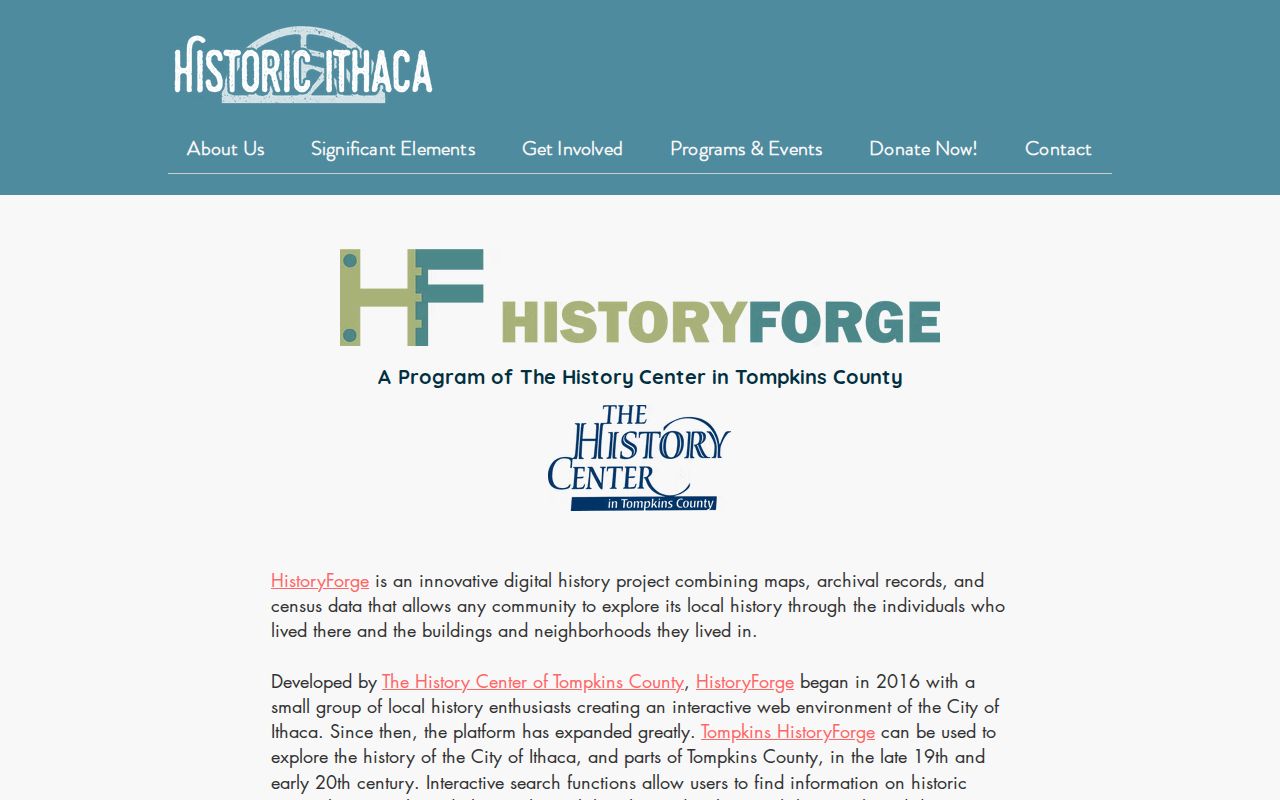
Match a HistoryForge building result to the parcel, street name, and date already recorded. It is particularly useful when a directory, historic map, and census transcription need to be connected to the same building.
Note: An empty HistoryForge result can reflect project coverage or address formatting, not the absence of earlier Ithaca residents.
Ithaca Previous Residents and Estates
When a household disappears from a directory, an obituary, death notice, or probate lead can help explain the change. The History Center holds obituary listings and newspaper material, including newspapers dating to 1819, as well as family files, maps, and cemetery resources. Indexes can provide a lead for a death, move, remarriage, or heir relationship. They should be paired with the dated address record, not used as a substitute for it.
New York WebSurrogate provides estate-oriented search modes for name, file, old index, index book, and will research.
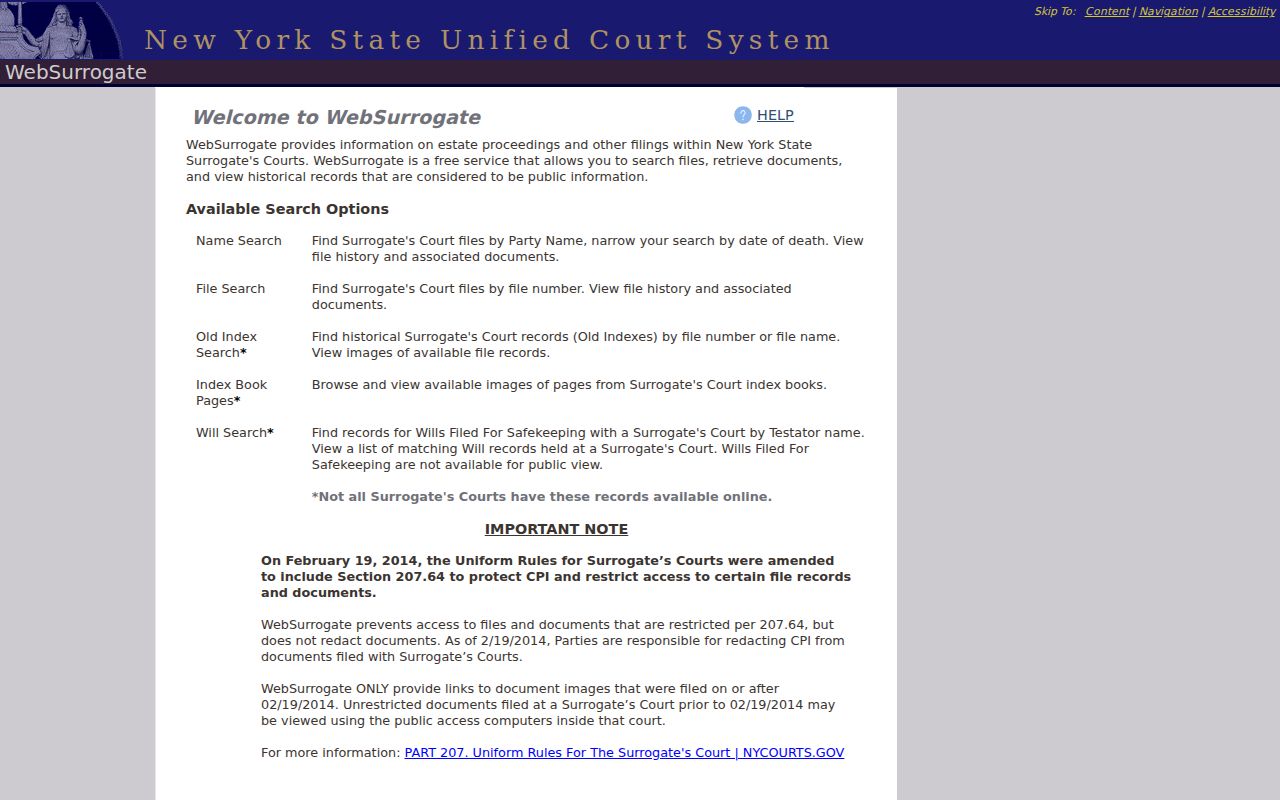
Use an estate result as a lead to the court file or historical index. The captured service has CPI and image limitations, so the courthouse clerk remains the route for records and certified material when needed.
Ithaca Past Street Names
Address continuity needs a direct check. Factory Street became Stewart Avenue when Ithaca became a city in 1888, so search both forms in the deed index, directory, newspaper, and map sources. South Hill also has older names with current counterparts: Creek Road is Giles Street, and the Owego Turnpike is Hudson Street. Waterfront language such as Steamboat Landing and Cayuga Inlet may not match modern geometry.
Historic Ithaca Virtual Views provides the historic walking-tour material illustrated here.
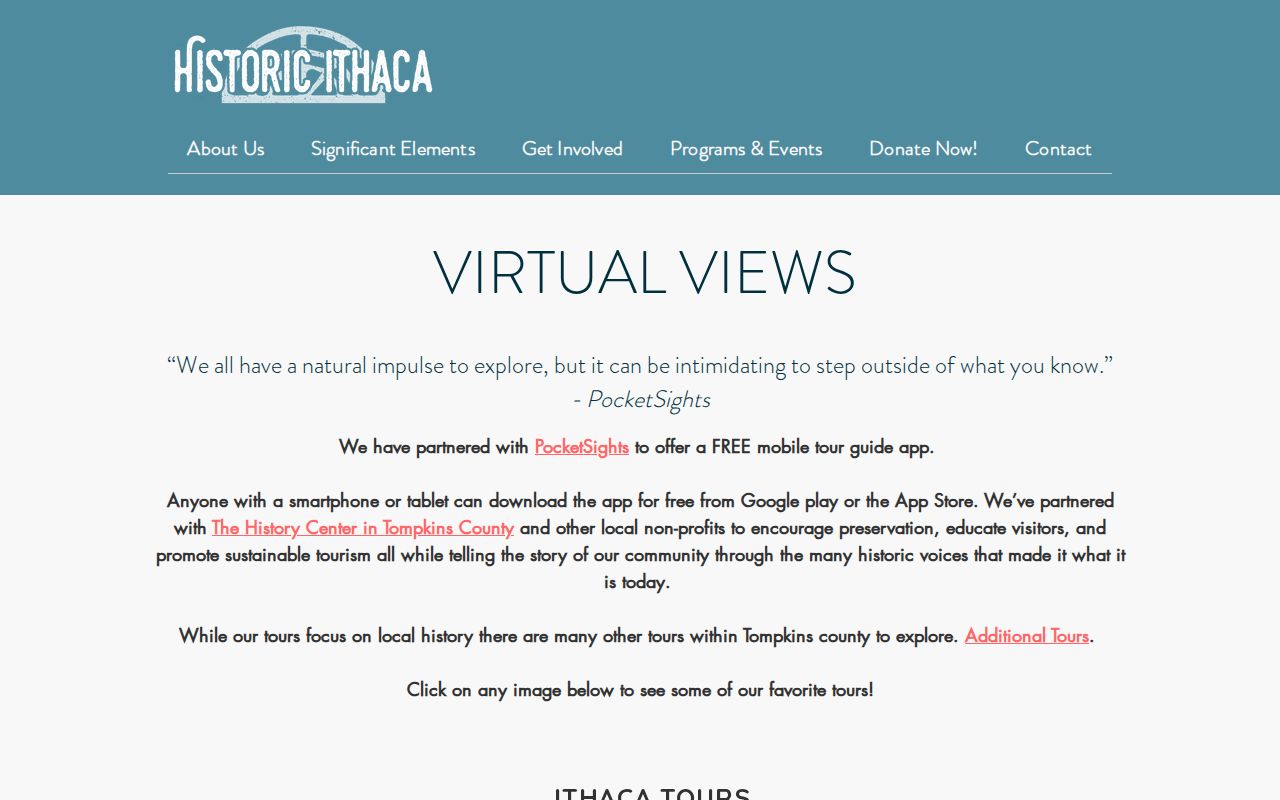
The neighborhood context can clarify why an older address description looks unfamiliar, but it does not replace the parcel, deed description, or official municipal record needed to identify the property.
Note: The available research did not confirm Ithaca Sanborn year runs or an online holder, so verify that source before relying on it.
Ithaca Address Records Limits
Past residents can be inferred only through dated, source-specific records. County census material for 1825 through 1925 is explicitly incomplete. The History Center catalog has only a portion online, and HistoryForge has project-specific coverage. County scanning and electronic document management improve discovery for records in county custody, but they do not create a universal name or address index.
Search both the City of Ithaca and Town of Ithaca context before requesting an address record. Their postal name can be the same while the custodian differs. Use a property history, family history, heir research, or civic-history purpose, and preserve the date and source for every match.
When the online route ends, switch channels rather than filling the gap with an assumption. The County Clerk accepts specific staff-search requests in person, by telephone, or by email. The History Center is the local house-history fallback for directories, maps, family files, newspaper indexes, photographs, obituaries, and cemetery resources; visits are by appointment, and an archivist can be asked for the street-and-house section or a map and deed cross-reference. The City’s current Permit Wizard is useful for applications, while an older issued-history request may need City FOIL.
Separate a missing result from a missing record. An older deed may be filed under a prior owner, a historic street name, a lot description, or a different municipal label. A directory can have delayed updates or initials instead of a full given name. Record the exact search form and date range used before changing the key.
Lawful use. Research about previous residents belongs to personal, family, house-history, or civic purposes. Do not use an old address trail to stalk, harass, intimidate, or harm any living person.